Tuesday, September 18, 2007

We are Moving On Up! Macys....Florsheims.... Eddie Bauers!


macys.com - 09.19 - 09.30

macys.com is the online destination for today's savvy customer


Offering

quality, value, style and great selections.

You'll find:


Products to fit every lifestyle- for her, him, home, and kids.
More than 14,000 products to choose from.
Gifts for all occasions.

America's favorite brands, such as Calvin Klein, Tommy Hilfiger, Sean John, Clinique, Vera Wang, Lenox, All-Clad, Lancôme, Ecko, Donna Karan, Krups, Waterford, JLO by Jennifer Lopez, MAC, Estée Lauder, Ralph Lauren, Puma, Cuisinart, Wedgwood, Villeroy & Boch, Nike, KitchenAid, and our exclusive brands INC International Concepts, Charter Club, Tools of the Trade and Hotel.

So get ready for the "changing of the leaves" with Macy's Fall Sale,
September 19th through September 30th. We are offering FREE SHIPPING throughout the site with purchases of $99 or more. Now is the best time prepare for the Fall! Plus, don't forget our Fall Home Sale which runs through the end of the month. We are offering 10 - 50% + values on the hottest home products!

Like These Below!

SPECIAL SAVINGS!
Canyon Crest "Grand Medallion" 24-Piece Room Ensemble in a Bag, Queen

icon
icon

iconicon


macys.com

Thursday, August 9, 2007

Click Chic: The Fine Art of Fashion Photography

School of Visual Arts (SVA) presents “Click Chic: The Fine Art of Fashion Photography,” an exhibition documenting the vitality of fashion photography as a vehicle for creative expression, formal experimentation and social commentary. On view will be nearly 50 images by six emerging and established photographers based in New York who have created distinctive bodies of work in fashion: Roderick Angle, Guy Aroch, Maki Kawakita, Ryan Michael Kelly, Chiun-Kai Shih and Sarah Silver. With cultural reference points as rich and varied as Art Nouveau, Buddhism, film noir, modern dance and Japanese Kabuki theater, they have made fashion photography their primary practice, applying a conceptual and formal rigor traditionally associated with fine art.

“Because they’re originally conceived and created to appear in magazines and advertisements, fashion photographs are often considered disposable,” said exhibition curator Dan Halm. “I’m hoping to change that by highlighting some exceptional images that hold their own as works of art.”

Fashion has been fertile ground for innovative photography for decades, but the lines between fine art and commercial photography have blurred in recent years as more and more photographers have found an outlet in both realms. The 1990s saw a marked increase in advertising and editorial work by art-world mainstays like Cindy Sherman and Nan Goldin. “Click Chic” considers a group of formally-trained photographers who came of age since the 1990s and have worked mainly on commission for clients in the fashion industry.

The exhibition includes a selection of never-before-seen photographs created as personal work as well as images that have appeared in editorial features and advertising campaigns around the world. Both bodies of work engage the medium’s history and reflect contemporary developments in landscape, portraiture and still life photography.

All six photographers in the exhibition are alumni of SVA, where the undergraduate and graduate curricula integrate photographic genres, identities and ambitions, removing the traditional barriers between “artistic” and “commercial” photography.

Roderick Angle (BFA 1994 Photography) moved into photography from performing on the experimental music scene by incorporating visuals into concerts. The onetime protégé of David LaChapelle went on to photograph David Byrne, Luscious Jackson and Afrika Bambaataa, has shot for Pepe Jeans, Sony and Target, and has been published in Black Book, Surface, Details and Spin.

Guy Aroch (BFA 1993 Photography) has photographed some of the most recognized faces of our time for fashion, beauty and celebrity portraits. With clients like H&M, Sonia Rykiel, French Elle, L'Oréal, Esprit, Jean Louis David, Bloomingdale's, Kenneth Cole, GQ, Interview, Nylon and The New York Times, he divides his time between New York City and Paris.

Born in Japan and schooled in Kabuki theater and traditional Ikebana flower arrangement, Maki Kawakita (MFA 2002 Photography, Video and Related Media) photographs fashion as well as pop-culture icons like Beyoncé, Paris Hilton and Missy Elliott. “Shakespeare said the world is like a stage in which we’re all players. I perform through the lens,” said Kawakita.

Trained in painting as well as photography, Ryan Michael Kelly (BFA 2004 Photography) finds inspiration in the work of Egon Schiele and Gustav Klimt. Kelly was drawn to photography for its immediacy and got his start shooting model tests for agencies in New York City. He has done freelance work for Men’s Vogue, Japanese Vogue, Trace, Dune, Italian Vanity Fair, D, German Elle, British Grazia, Amica and Deutsch. Current clients include Ann Taylor, Theory, Boots, Fubu and Bloomingdale’s.

After shooting Jackie Chan and then-unknown Kate Moss early in his career, Chiun-Kai Shih (BFA 1996 Photography) went on to become US editor of GQ Taiwan and Taiwanese Vogue. For the past nine years, he has photographed exclusively for Condé Nast. “No matter if you’re gay or straight, you want to see people naked,” said Shih, who as a Buddhist had to overcome an aversion to nudity to shoot an early series entitled Hotel Nudes, edited by Bob Richardson.

Sarah Silver (MFA 2001 Photography, Video and Related Media) first came to prominence with fashion photographs of the Stephen Petronio Dance Company in which the dancers wear designs by Prada and Imitation of Christ. Today her clients range from cosmetics giants Avon, Clairol, L’Oréal and Maybelline to fashion icons like Proenza Schouler, Surface, Elle, V Magazine and French Vogue.

The Visual Arts Museum
Location: 209 East 23rd Street
Open: 9am to 7pm, Monday through Friday | 10am to 6pm on Saturday
Admission: Free
The gallery is accessible by wheelchair. For further information call 212.592.2145.

School of Visual Arts (SVA) in New York City is an established leader and innovator in the education of artists. From its inception in 1947, the faculty has been comprised of professionals working in the arts and art-related fields. SVA provides an environment that nurtures creativity, inventiveness and experimentation, enabling students to develop a strong sense of identity and a clear direction of purpose.

For more information please visit www.schoolofvisualarts.edu

Tuesday, July 3, 2007

Does Paris Hilton Have any Sense? Fashion or Otherwise!


Free as a Bird and straight to Hawaii…

Like splashing in the surf and of course working on her tan! Basically as soon as Paris Hilton caught her breath from her revealing Larry King interview she hopped on the first flight out of La-La Land and headed straight for Maui, Hawaii. Spotted on the shore on June 29 wearing a teenie weenie bikini with an exotic print (Maya Swimwear and Letarte Swimwear make bikinis with similarly striking prints perfect for catching waves as well as the attention of fellow beach-goers), Paris definitely seems to be enjoying her newfound freedom.

What some people do not seem to be enjoying, however, are some of Paris’ answers to questions Larry King asked her in their much-discussed interview last week. When asked if she had ever been addicted to, or even taken, drugs, Paris replied with a firm “no”. Um, did Paris forget the whole Paris Exposed scandal? There was tons of photographic and filmed evidence that Paris has smoked pot (at the very least).

In one of the vids, Paris (who is filming) says to a friend, "Dude, we're smoking pot if you guys want to smoke." In another, she tells sister Nicky that she has “the best pot. You wanna smoke pot? I have the best pot.” And she sure sounds proud of that! Oh, Paris- anyone with a pulse knows that you’ve probably dabbled in drugs, you should have taken this opportunity to say something like “yes, I’ve done drugs in the past, but now I know how life-damaging they can be," or something to that extent.

Live and learn!

Friday, June 29, 2007

Remembering Liz Claiborne

Fashion Icon, Liz Claiborne, Passes on to Fashion Heaven

Born: 31-Mar-1929
Died: 26-Jun-2007

At the top of the fashion world, Liz Claiborne became a celebrity, traveling around the country to department stores to meet her fans. Once, while flying from a fashion show luncheon to a dinner show in another city, her plane was delayed. Ms. Claiborne assumed she had missed the appearance. After landing, however, she discovered that the audience was still waiting for her.

“I changed in the hotel room in about two seconds flat and went out, and when I walked in that room — the applause,” she told Women’s Wear Daily in 2000. “It was the first time I realized it was like being a star for a short while. It was a great feeling, but it was a feeling also of responsibility, when you have women reacting that way and depending on you.”

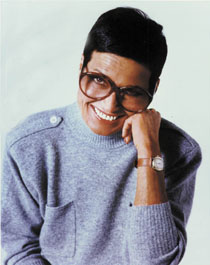
Ms. Claiborne, with her close-cropped black hair and oversize glasses, was an imposing boss to her employees and an aloof chief executive to financial analysts, presiding over design meetings with a delicate glass bell she rang to maintain order. She was a critic of the fashion industry and spoke out about a lack of opportunities for women to achieve equality in other fields.

When she was 19, Ms. Claiborne, who had studied painting in Brussels and Nice but never completed high school, won a design contest advertised in Harper’s Bazaar magazine and was inspired to pursue a career in fashion. Her parents did not approve. According to Irene Daria’s book “The Fashion Cycle” (Simon & Schuster, 1990), the family was driving through Manhattan two years later when Ms. Claiborne declared, “I’m staying.” Her father let her out of the car, handed her $50 and said, “Good luck.”

“It wasn’t as bad as it sounds,” Ms. Claiborne recalled at a meeting with Liz Claiborne’s current designers last year. She stayed with her grandmother for a month while looking for a job. Tina Leser eventually hired her to work at her dress house as a sketcher and fit model.

Ms. Claiborne went on to work for a few other dress companies and later the Rhea Manufacturing Company, where she met her second husband, Mr. Ortenberg, in 1954. Although they were both married at the time — she to Ben Schultz, a photography agent — they began an affair and left the company because of it, Mr. Ortenberg said.

“The two of us were accidents waiting to happen,” Mr. Ortenberg said. “I won her by reading aloud ‘The Little Prince.’ ”

They divorced their spouses and were married in 1957. After retiring, she and Mr. Ortenberg separated themselves from fashion almost entirely, setting off on travels to remote corners of the world in what could have been described as storybook adventures.

“American women are not the chicest things in the world,” Ms. Claiborne said. “They want clothes that are comfortable, young and snappy.” After working for 16 years with another fashion designer, she stared her own clothing line, with the assumption that she was a better judge of what women wanted to wear to work.

As a designer, Ms. Claiborne did not care to be considered a trendsetter. She placed practical concerns over the glamour of the catwalks and the prestige of designer prices. Her arrival as a fashion brand was well timed, catching the beginning of a great change in American society as women headed to the workplace in large numbers.

She created a new foundation for a modern working woman’s wardrobe, which had begun, she once acknowledged irritably, as the bland reinterpretation for women of a man’s navy blue suit and tie. Blouses that closed with frilly bows did not appeal to Ms. Claiborne. Her creative expressions were made of colorful tailored separates that could be mixed with other pieces to create many outfits.

As women made headway in corporate America, Ms. Claiborne expanded with office-friendly sportswear that conveyed a potent blend of intelligence, strength and femininity. It eventually transcended the workplace, becoming a lifestyle brand. One of her first designs was a velour peasant blouse; she sold 15,000 pieces in one season.

“I wanted to dress busy and active women like myself, women who dress in a rush and who weren’t perfect,” Ms. Claiborne said in a 1989 interview in Women’s Wear Daily. “But loving clothes, I knew clothes could do a certain thing for you from a flattering point of view. And I tried to bring good taste to a mass level.”

Ms. Claiborne correctly anticipated a market for affordable business-like clothes that women could wear to compete with men in professional workplaces. In her no-nonsense way, she became a role model — and her label an inspiration — to those who were looking to break through glass ceilings, as she had done.

In 1986, Liz Claiborne Inc. became the first company founded by a woman to be ranked among the Fortune 500. And of the companies on that list, hers was one of only a handful with women as chief executives.

When Ms. Claiborne retired from active management of the company, in 1990, it was the largest women’s apparel maker in the country, with $1.4 billion in sales. It remains among the largest today, with $5 billion in sales in 2006 and a portfolio of brands that now includes Dana Buchman, Juicy Couture, Ellen Tracy and Lucky Brand Jeans.

But the company, squeezed by moderate-priced department store brands, has been hard pressed in recent months to maintain the sales of its traditional labels like Liz Claiborne; it reported a 65 percent decline in first-quarter earnings this year, and the outlook for the rest of 2007 is weak.

Last week, the company announced that it had reorganized its brands into wholesale and retail divisions while eliminating several executive positions.

Her strategy was to provide an alternative to the expensive options facing women. Her designs, she said, were “businesslike, but not too pinstripe, more casual, more imaginative, less uptight.” I became a fan of Ms. Claiborne when she designed clothing the the full-figured women, especially designer jeans. It really saddens me when I hear of the Urban Legend that she does not design clothes for African-American women because they have "large rear ends." That is so ridiculous. Ms. Claiborne will be sadly missed in the fashion industry. She filled a void that was very important in the fashion industry. Thank you very much, Liz.

Best3Concepts

See all of your favorites Liz Claiborne outfits here.


First In Flight & Low Price

Low Cost flight reservation